 1590 Reviews


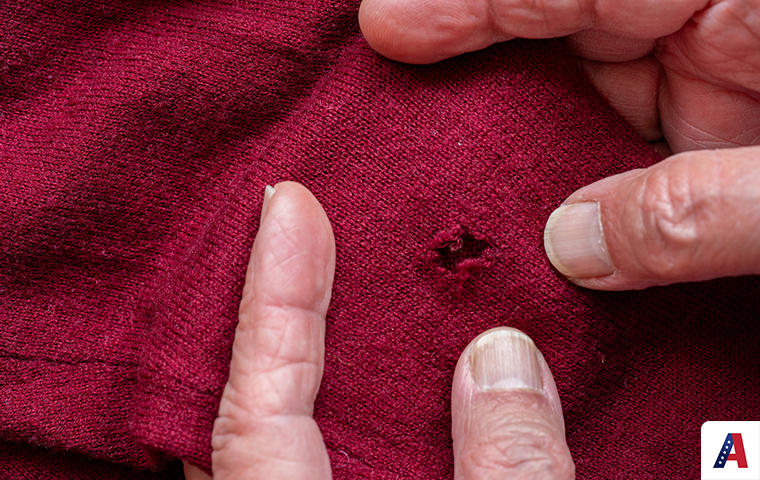


If you know the frustration of putting on your favorite sweater only to find small holes, or have been dismayed to discover damage to your home’s carpet, you probably know what it’s like to deal with a carpet beetle or clothes moth infestation. Both of these pests can damage animal-based materials, like wool, but knowing which pest you’re dealing with isn’t always as obvious as you might think.
Identifying the culprit behind damage to your rugs, fabrics, upholstery, and clothing requires knowing the differences in larval appearance, damage patterns, shed skins and webbing, where activity occurs, and adult behavior. All-American Pest Control has put together this guide to help you determine if carpet beetles or clothes moths are damaging your belongings.
What Is the Biggest Difference Between Carpet Beetles and Clothes Moths?
The easiest way to tell carpet beetles and clothes moths apart is usually by the evidence they leave behind. The larvae damage your belongings and are most likely to leave signs of their presence.
Carpet beetle larvae:
-
Are bristly or hairy
-
May leave shed skins
-
Tend to wander more widely through rooms
Clothes moth larvae:
-
Are pale and caterpillar-like
-
Stay close to the fabric they are feeding on
-
May leave silk webbing, tunnels, or cases
What Does Carpet Beetle Damage Look Like?
Carpet beetle larvae feed on animal-derived materials, such as wool, fur, leather, and feathers. The damage they cause often shows up as:
-
Irregular holes
-
Ragged edges
-
Threadbare patches
-
Damage spread across rugs, upholstery, or clothing
Larvae may move away from the original food source, so damage can appear in more than one part of a room. Another sign of carpet beetles is finding their shed skins.
What Does Clothes Moth Damage Look Like?
Clothes moth larvae usually remain close to the material they are feeding on. Unlike carpet beetles, most of the damage will remain in a localized area.
Common signs of clothes moths include:
-
Small holes in garments
-
Thinned or grazed fabric
-
Silk webbing
-
Silken tubes or portable cases
Clothes moth activity is often concentrated in:
-
Closets
-
Drawers
-
Stored clothing
-
Folded textiles
What Do Carpet Beetle Larvae Look Like?
Carpet beetle larvae are sometimes compared to tiny “woolly” caterpillars. They are small with oval-shaped bodies. They can be brown, tan, or banded in color. Their bodies are covered in hairs or bristles. It can be easier to find the shed skins of carpet beetle larvae than the larvae themselves. Look in the following areas if you suspect these pests are in your house:
-
Along baseboards
-
Under furniture
-
In closets
-
Around rugs
-
Near stored fabrics
What Do Clothes Moth Larvae Look Like?
Clothes moth larvae are slender and caterpillar-like. They have pale cream or whitish bodies with darker heads. These pests don’t travel far, preferring instead to stay close to their feeding site. You may find them hidden inside silk tubes, webbing, or small cases attached to fabric.
What Materials Do Carpet Beetles and Clothes Moths Eat?
Both carpet beetles and clothes moths are attracted to animal-based materials that contain keratin. They commonly eat:
-
Wool
-
Cashmere
-
Felt
-
Fur
-
Feathers
-
Down
-
Silk
-
Animal hair
-
Pet hair
-
Dander
-
Dead insects
-
Other organic debris
Pure synthetic or plant-based fabrics are generally less attractive to these pests unless blended with animal fibers or soiled with food, sweat, or oils.
Why Are There Holes in My Clothes If I Never See Moths?
Adult moth sightings are not required for clothes moth damage to be present. The larvae are the ones that generally cause the damage, and these pests have not yet become moths. Clothes moth larvae tend to stay hidden in the folds of fabric and in dark storage areas, making them difficult to find. Adult clothes moths can be small, making them easy to miss.
It’s also possible that the damage you see in your clothing is not from clothes moths at all, but from carpet beetles. If this is the case, you won’t see moths because they aren’t present.
If you find damage, the best way to identify the culprit is to inspect it for:
-
Webbing
-
Cases
-
Shed skins
-
Larvae
Where Should You Look for Carpet Beetles?
Carpet beetles can show up in a variety of areas. Adults often move towards light, so they may be found near windowsills or other light-filled areas. Larvae are more likely to be near a food source. You may find carpet beetle larvae near:
-
Carpet edges
-
Baseboards
-
Closets
-
Upholstered furniture
-
Under beds
-
Under furniture
-
Stored wool or natural-fiber items
-
Areas with pet hair or lint buildup
Where Should You Look for Clothes Moths?
Clothes moths are most likely to be found in dark, undisturbed areas where you store natural-fiber items. Clothing stored for long periods without being cleaned is most vulnerable to clothes moths. You may find clothes moths or their larvae in:
-
Closets
-
Drawers
-
Wardrobes
-
Garment bags
-
Stored blankets
-
Rugs
-
Upholstery
Does Having Carpet Beetles or Clothes Moths Mean Your Home Is Dirty?
Finding carpet beetles or clothes moths in your Tennessee home does not mean your house is dirty. Infestations can start in a number of ways, none of which require a dirty house. These pests are attracted to:
-
Fabrics
-
Stored items
-
Natural materials
-
Pet hair
-
Dead insects
-
Open windows or doors
Although finding these pests doesn’t mean your house is dirty, it can help reduce food sources and make activity easier to spot if you implement a routine cleaning schedule.
How Can You Tell Which Pest Is Causing the Damage?
Are you finding damage to your belongings, but don’t know which pest is to blame?
Carpet beetles are more likely when you find:
-
Hairy larvae
-
Shed skins
-
Irregular damage
-
Activity away from the damaged garment
Clothes moths are more likely when you find:
-
Pale larvae
-
Silk webbing
-
Fabric cases
-
Damage concentrated on stored garments or textiles
If the evidence is unclear, a professional inspection can help you identify the culprit.
How Do You Get Rid of Carpet Beetles or Clothes Moths?
If you need to get rid of carpet beetles or clothes moths, start by locating and removing the source. All-American recommends:
-
Inspecting affected belongings
-
Removing heavily infested items when necessary
-
Laundering or dry-cleaning washable fabrics
-
Vacuuming carpets, baseboards, furniture, and storage areas
-
Removing lint, pet hair, and organic debris
-
Cleaning closets and drawers
The treatment should match the pest and the areas where larvae are active. If you don’t remove all adults and larvae, the problem will persist.
Should You Throw Away Clothes With Moth or Beetle Damage?
Damaged items don’t always need to be discarded. When deciding what to do, consider the extent of the damage, if the item can be washed, dry-cleaned, or repaired, and if the item holds value or sentimental importance. If an item is heavily infested, it may be easier to discard it than to try to salvage it.
How Can You Prevent Carpet Beetles and Clothes Moths?
It’s better to prevent a carpet beetle or clothes moth infestation than to have to deal with the damage they cause after moving into your home. Prevention works best by reducing both food sources and hidden storage areas. To stop these pests before they get inside, All-American Pest Control recommends the following prevention tips:
-
Wash or dry-clean clothing before putting it into long-term storage
-
Store vulnerable fabrics in sealed containers
-
Vacuum closets, carpet edges, baseboards, and under furniture
-
Remove pet hair and lint
-
Inspect secondhand textiles before bringing them inside
-
Rotate or inspect stored woolens periodically
-
Keep closets and storage areas less cluttered
When Should You Call Pest Control?
Professional help to eliminate a carpet beetle or clothes moths problem may make sense when:
-
Damage keeps appearing
-
Larvae are found in several rooms
-
The source cannot be identified
-
Infested areas are difficult to access
-
Cleaning and laundering do not stop the problem
A pest professional can help identify which species is in your home. They will locate the area of the infestation, determine whether treatment is needed, and recommend steps to protect your belongings. If your Rutherford County home is infested by fabric pests, get in touch with All-American Pest Control.
Protect Your Clothes, Rugs, and Stored Belongings
Carpet beetles and clothes moths can cause similar damage, but the evidence they leave behind is different. The most useful tips to know the difference are:
-
Hairy shed skins point more toward carpet beetles
-
Silk webbing or cases point more toward clothes moths
-
The larvae, not the adults, cause most of the damage
Inspect damaged items and the surrounding storage areas to identify the species before deciding on a treatment plan. If you need help identifying the pests or are having recurring issues with them, get in touch with All-American Pest Control to schedule your FREE home evaluation.
Comprehensive Pest Control Solutions in Nashville, TN & Nearby Neighborhoods
Since 1961, All-American Pest Control has been your go-to team of trusted pest experts for homes, businesses, and home builders throughout Nashville and Middle Tennessee. Our expert team offers termite treatments, mosquito reduction, rodent removal, ant and spider control, and wasp nest removal—keeping your property protected year-round. As a local, family-owned company, we take pride in offering reliable, professional pest solutions with outstanding customer service.
We proudly serve: Arrington, Christiana, Lascassas, LaVergne, Nolensville, Readyville, Rockvale, Smyrna, Barfield, Murfreesboro, Blansett Meadows, Deerfield, Fairfield Estates, Scottland Acres, Steeplechase Meadows, Stones River, Walterhill, Eagleville, Milton, as well as the entire Rutherford County and Greater Murfreesboro areas.
For trusted pest control in Nashville, TN, and these surrounding communities, contact All American Pest Control today! Call (615) 824-8814 or schedule a free home evaluation online!