 1588 Reviews


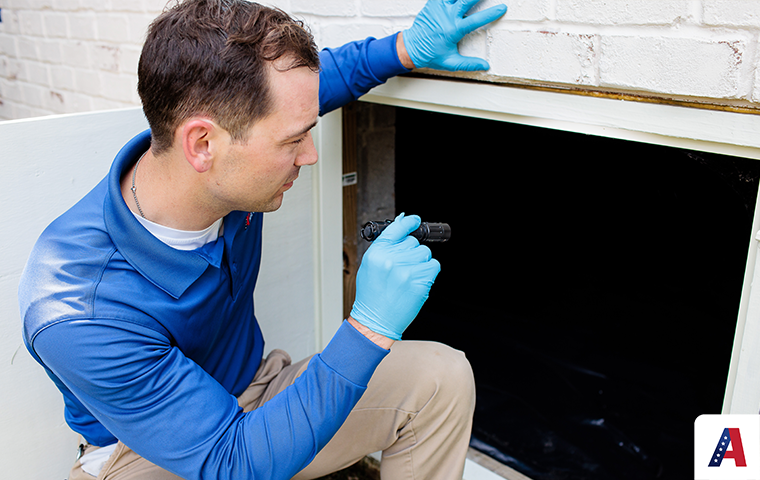


If your last trip to your basement or crawl space was filled with cobwebs and eight-legged creatures, you may be wondering why so many spiders show up in this space. Basements and crawl spaces can give spiders exactly what they need: prey, moisture, darkness, and quiet shelter.
Oftentimes, spiders don’t enter these spaces because they’re attracted to the area itself, but because they’re following a food source. They can easily get inside through small openings and may choose to stick around once inside. If you’d like to get rid of the spider issue in your basement or crawl space, All-American Pest Control has some helpful tips to reduce activity.
Why Do Basements and Crawl Spaces Attract Spiders?
Basements and crawl spaces have all of the things that spiders like. First of all, these areas tend to be dark and quiet. There’s not a lot of activity, so spiders don’t have to spend as much time worrying about being disturbed. Basements and crawl spaces are full of protected areas where spiders can build their webs and hide. The corners of ceilings, joists, storage areas, and wall voids all provide shelter.
Second, these areas tend to be moisture-rich and a bit cooler than your home’s living areas. They offer an ideal environment where spiders can thrive.
Finally, many basements and crawl spaces have a variety of insects living in them. Spiders often initially get into these areas while following these insect prey. If there is a good supply of food for the spiders, they have no reason to leave.
Are Spiders Following Other Insects Into These Spaces?
Food is one of the biggest reasons spiders remain in basements and crawl spaces. Insects often gravitate towards damp, sheltered areas, so they often show up in basements and crawl spaces. Common pests to find in these areas include:
-
Silverfish
-
Springtails
-
Sowbugs
-
Flies
-
Other small insects
Recurring spider activity can sometimes point to a larger underlying insect problem. If spiders don’t have a food source, they won’t stay in these areas, so finding spiders repeatedly may indicate that other pests are present.
Does Moisture Attract Spiders to Basements and Crawl Spaces?
Moisture can support both spiders and the insects they feed on. Although they don’t need a high level of humidity, spiders do need a water source to survive. Your basement or crawl space may provide moisture in more places than you realize. Common moisture sources include:
-
Plumbing leaks
-
Condensation
-
Damp foundation walls
-
Poor drainage
-
Crawl space humidity
-
Standing water
-
Reducing excess moisture can make the area less favorable for both spiders and their prey.
Implementing dehumidification measures can help manage moisture in these spaces.
Does Clutter Make Spider Activity Worse?
Although clutter may not make spider activity worse, it does make it more difficult to identify them in certain areas. Boxes, stored materials, furniture, and debris create undisturbed hiding areas that make spiders, webs, egg sacs, and other signs harder to notice. If possible, move stored items out of cardboard boxes and switch to sealed plastic bins to reduce spider hiding spots.
How Do Spiders Get Into Basements and Crawl Spaces?
Even relatively large spiders are still fairly small, so it doesn’t take a large opening to allow them into your home. Tiny structural openings that spiders use as entry points include:
-
Foundation cracks
-
Basement windows
-
Crawl space vents
-
Gaps around doors
-
Openings around plumbing
-
Electrical and utility penetrations
Sometimes spiders don’t enter your home on their own. Instead, they get carried inside. Spiders or egg sacs can be carried indoors on:
-
Firewood
-
Plants
-
Storage boxes
-
Outdoor equipment
Why Do Spiders Seem More Noticeable During Certain Seasons?
Seasonal changes can alter spider activity and movement. In the summer, most spiders are content to remain outdoors where the temperature is warm and food sources are plentiful. However, as the weather and seasons change, they may start seeking shelter indoors as it becomes colder, drier, or otherwise less favorable.
Spider activity also increases in the fall when male spiders start searching for mates. They may end up inside as they move around. When combined with the change in temperature, it’s common to notice an increase in spider activity in your home in the fall and winter.
What Kinds of Spiders Are Common in Basements and Crawl Spaces?
Cellar Spiders
Cellar spiders are commonly associated with dark, quiet indoor spaces. These spiders have long legs and loose, irregular webs. Although a nuisance, cellar spiders are generally considered harmless pests that are not a major threat.
Other House Spiders
Several common house spiders may use corners, joists, storage areas, and wall voids to build their webs and hunt for prey.
Spiders That Deserve More Caution
Black widow and brown recluse spiders are active in Tennessee and they can move into basements and crawl spaces. If you see a spider that you can’t identify, it’s best not to handle it in case it’s one of these venomous species. Instead, contact a professional pest control expert for identification.
Does Seeing Several Spiders Mean You Have an Infestation?
Multiple spider sightings is not an immediate cause for concern. However, if these sightings are paired with other signs, it’s more likely to be an indication of a potential problem. Seeing spiders on a recurring basis often means the space is providing food and shelter. Common signs of a spider infestation include:
-
Webs repeatedly returning
-
Egg sacs
-
Frequent sightings in the same area
-
Large numbers of other insects nearby
How Can You Reduce Spiders in Your Basement or Crawl Space?
The good news is that there are plenty of things you can do to reduce spider activity in your basement or crawl space. You can prevent spiders by:
-
Repairing plumbing leaks
-
Reducing excess humidity
-
Removing unnecessary clutter
-
Vacuuming webs and egg sacs
-
Storing belongings in sealed containers
-
Sealing foundation cracks
-
Repairing screens and vents
-
Closing gaps around utility penetrations
-
Reducing prey insects
Will a Dehumidifier Help With Basement Spiders?
Although a dehumidifier will not eliminate spiders, it can certainly help make your basement or crawl space less habitable for them. Lowering excess humidity in this space makes the environment less favorable for:
-
Moisture-loving insects
-
Some spider prey
-
Damp conditions that support pest activity
However, it’s important to remember that moisture control is not enough on its own. It works best alongside exclusion, cleaning, and insect control.
Why Doesn't Removing Webs Always Solve the Problem?
Shouldn’t clearing away spider webs and the spiders you see take care of your spider problem? Not necessarily. You may temporarily reduce the number of spiders in your basement or crawl space by doing this, but it only addresses a symptom, not the root cause, of why they’re there. Spider activity will return if:
-
Insect prey remains abundant
-
Entry points stay open
-
Moisture continues
-
Clutter provides shelter
Long-term control depends on addressing all of the conditions supporting spider activity.
When Should You Call Pest Control for Basement or Crawl-Space Spiders?
When does spider activity move from a temporary increase to an issue that requires professional help? All-American Pest Control recommends getting in touch with us when:
-
Spiders keep returning after cleaning and exclusion
-
Webs reappear quickly
-
Large numbers of insects are present
-
Activity is difficult to access
-
A potentially medically significant spider is suspected
-
Moisture or structural conditions are contributing to the problem
One of our pest professionals can help identify:
-
The spider species
-
Prey insects
-
Entry points
-
Moisture conditions
-
Appropriate treatment and prevention steps
Make Your Basement or Crawl Space Less Inviting to Spiders
Spiders usually get into basements and crawl spaces due to insect prey, moisture, shelter, and easy access. If you want to make this space less inviting to spiders, you have to address these issues in order to reduce the conditions that support both spiders and their food sources. To get help identifying recurring spider activity or contributing conditions, get in touch with All-American Pest Control to schedule your free home evaluation. We’ll help make your basement or crawl space uninviting to spiders and the insects that attract them.
Your Trusted Nashville, TN Pest Control Experts in Nashville, TN & Nearby Neighborhoods
Since 1961, All-American Pest Control has been your go-to team of trusted pest experts for homes, businesses, and home builders throughout Nashville and Middle Tennessee. Our expert team offers termite treatments, mosquito reduction, rodent removal, ant and spider control, and wasp nest removal—keeping your property protected year-round. As a local, family-owned company, we take pride in offering reliable, professional pest solutions with outstanding customer service.
We proudly serve: Antioch, Oak Hill, Belle Meade, Berry Hill, Nashville, Old Hickory, Joelton, Madison, Green Hills Estates, Haynes, Kemper Heights, Metro Center, Northwest Nashville, Rivergate, Talbot's Corner, Bakers, Bellshire Estates, Blair Heights, Bordeaux, Cane Ridge, Germantown, and the entire Davidson County and Greater Nashville areas.
For trusted pest control in Nashville, TN, and these surrounding communities, contact All American Pest Control today! Call (615) 824-8814 or schedule a free home evaluation!