 1585 Reviews

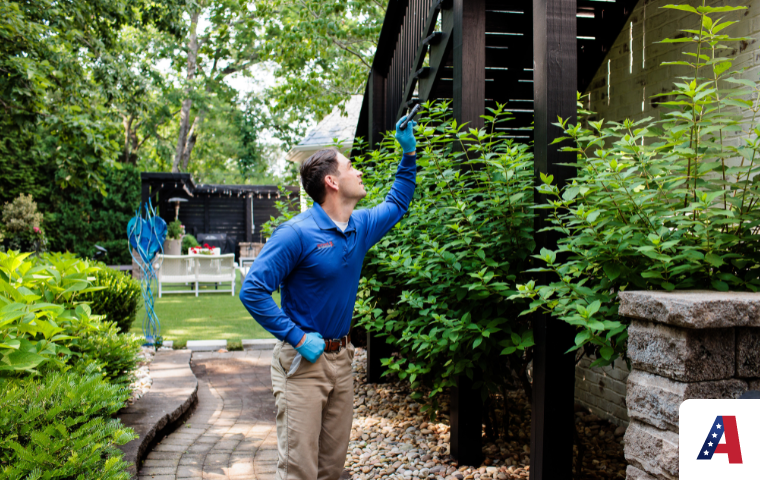


You step outside to grab the mail and suddenly find yourself doing an elaborate little dance to avoid the wasp hovering right at eye level. Sound familiar? Spring is prime time for wasps, and right now queen wasps are waking up from their winter rest and scouting out the perfect spot to build their nests — and unfortunately, your roofline and doorways are looking pretty attractive to them.
This is the very beginning of colony formation, and homes often provide the perfect space for a queen to start her nest. Unfortunately, what starts small can grow quite large through the summer, but there’s good news, too. If you catch these queen wasps in the early stages of colony building, you can stop them before the colony has a chance to grow. Find out what you need to know about wasps in the spring below.
What Happens to Wasps During the Transition From Winter to Spring?
Each fall, as the weather gets cold, wasp colonies die off. Only the queens survive, and they do so by finding a sheltered space to overwinter in a state of diapause, which is similar to hibernation. When the temperature warms up in the spring and remains consistently warm, the queens come out of diapause, ready to start their new colonies.
These queens are on a mission. They can’t lay eggs until they have a nest where they can put the eggs. They can’t have a nest until they find a suitable place to build the nest. The wasps you see flying around right now are searching for a place to build their nest, or they’re in the early stages of building their nests.
What Makes a House an Ideal Place for a Wasp Nest?
When you were looking for a home, what were the essentials? It had to be in good condition, including a roof that didn’t leak, heat for winter, and locks to keep you safe. In the same way that we look for certain things when choosing a place to live, queen wasps also have a particular set of requirements for where they build their nests. They want shelter from the elements, a safe place away from potential predators, and a stable structure that won’t easily move.
While trees are often a favorite spot for wasps to build their nests, our homes also provide the ideal conditions. Roof overhangs, eaves, and covered areas, like porch ceilings, mimic natural shelter. They protect the nests from wind and rain. These spaces are also often high off the ground, providing safety from animals and people who might try to attack them. Furthermore, houses offer a lot of stability to keep the nest intact.
How Does Warmth From Your Home Influence Nest Building?
Another reason that your house is the ideal spot for queen wasps to build their nests is that it emits heat. Think about your gardens each spring. It’s common to notice flowers popping up along the foundation of your house sooner than in other areas of your yard because the warmth from your house helps them grow. The same is true for wasps.
If wasp nests are up against your house, the heat can help eggs and larvae develop, especially on early spring days when the temperature can fluctuate. Sun-facing sides are especially attractive to queen wasps as they look for a nesting site.
Why Do Wasps Stick Around Once They Find Your Property?
Although finding the perfect place to build the nest is the highest priority for a queen wasp, there are other considerations to take into account. She might find a warm, dry, and safe area of shelter, but it won’t do her any good if it’s miles away from a food source. Wasps need to eat, and as their colony grows, they’ll require more and more food.
If your property provides a plentiful food supply, it makes it far more likely that the colony will become well-established and stick around all spring, summer, and fall. What do wasps eat? They like to eat insects, sugary substances like nectar, soda, and fruit, and even protein-rich foods like red meat. If your yard is filled with flowers, fruit trees, and vegetable gardens, has a large insect population, and offers easy access to garbage, wasps are very likely to stick around once they find your property.
What Does a New Wasp Nest Look Like in the Early Stages?
We’ve all seen the large, papery nests that wasps live in. Some of them are huge. However, they don’t start that way. At this time of year, in spring, the nests will be much smaller. The queen isn’t interested in building a giant nest. She’s interested in making one just big enough to have some cells where she can lay her eggs.
You can expect wasp nests to be about the size of a golf ball at this time of year. They’ll have a thin, papery texture, and will often be attached to the undersides of rooflines or in the corners of your house. Don’t expect to see a lot of wasp activity around nests in the spring. The queen is still basically flying solo until the eggs hatch and mature, so you won’t see a lot of wasps buzzing around the nest.
How Quickly Can a Small Wasp Nest Turn Into a Bigger Problem?
At first, the only wasp on your property will be the queen. She’ll build a small nest, lay some eggs, and take care of them as they hatch and become larvae. By late spring, these larvae will have matured and begin to appear around your property.
Once worker wasps are available to build the nest and take care of the young, the colony expands much more rapidly. The queen can solely focus on laying eggs, allowing her production to greatly increase. By summer, colonies are usually quite large. Although colony sizes vary based on the wasp species and other factors, they can range from hundreds to thousands of members at their peak.
Where Are You Most Likely to Find These Nests Around Your Home?
Because of their smaller size in the spring, it can be more difficult to spot wasp nests at this time of year. That’s why it helps if you know where to look for them. All-American Pest Control recommends checking the following areas:
-
Along roof edges and soffits
-
Under decks and railings
-
Inside garages or storage areas
-
Around vents and openings
-
In the corners of exterior walls
What Early Actions Can Prevent Wasps From Settling In?
If you can do some preventative work before the queens show up in the spring, you can avoid having to deal with a wasp colony through the summer. To make it less likely for queens to choose your property as a nesting site, try these tips:
-
Seal gaps before nesting begins
-
Remove old nests before spring
-
Keep outdoor areas clean and less attractive
-
Use deterrents in known nesting spots
What Should You Do If You Spot a Nest Forming?
If you spot a nest forming, you’ll want to take action before the colony has a chance to grow. Acting early, when the nest is small, is the best way to avoid dealing with a large colony later in the summer.
Although you can try to remove the nest yourself, it is recommended that you use caution when doing so. Queen wasps can and will sting if provoked. Also, many nests are high off the ground, which can make it dangerous to try to reach them. If you prefer to take a safer approach, give All-American Pest Control a call. We can help you safely and thoroughly remove the problem before it grows.
When Does It Make Sense to Bring in Pest Control?
In addition to getting in touch with the pros at All-American to get rid of new nests you discover, but aren’t interested in removing yourself, you may want to reach out if you notice any of the following situations:
-
You’ve noticed a nest, and it’s growing quickly
-
The location of the nest is difficult or unsafe to reach
-
The wasps around your yard are becoming aggressive
-
Multiple nests are appearing
Ready to Stop Wasps Before They Take Over Your Home?
By acting now to remove wasp nests you find around your property, you can get ahead of bigger problems that develop through the summer. Schedule a free home inspection with All-American Pest Control and we can help you identify issues before they have a chance to grow. Our routine pest control also prevents repeat pest problems by staying ahead of them. Early action is the difference between a small fix and a bigger problem. Contact All-American to get started today.
Your Trusted Nashville, TN Pest Control Experts in Nashville, TN & Nearby Neighborhoods
Since 1961, All-American Pest Control has been your go-to team of trusted pest experts for homes, businesses, and home builders throughout Nashville and Middle Tennessee. Our expert team offers termite treatments, mosquito reduction, rodent removal, ant and spider control, and wasp nest removal—keeping your property protected year-round. As a local, family-owned company, we take pride in offering reliable, professional pest solutions with outstanding customer service.
We proudly serve: Antioch, Oak Hill, Belle Meade, Berry Hill, Nashville, Old Hickory, Joelton, Madison, Green Hills Estates, Haynes, Kemper Heights, Metro Center, Northwest Nashville, Rivergate, Talbot's Corner, Bakers, Bellshire Estates, Blair Heights, Bordeaux, Cane Ridge, Germantown, and the entire Davidson County and Greater Nashville areas.
For trusted pest control in Nashville, TN, and these surrounding communities, contact All-American Pest Control today! Call (615) 824-8814 or Schedule a Free Consultation online.