 1583 Reviews

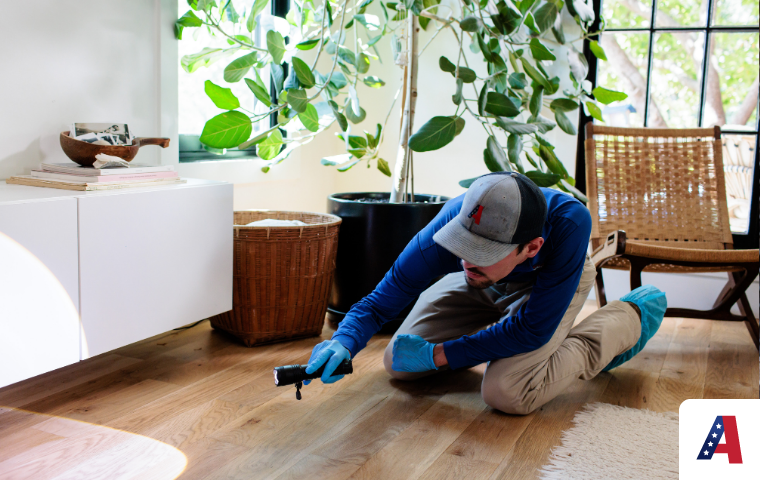


Why Tennessee Homes See More Ants During Late Summer
You’ve likely noticed that ant activity has become especially noticeable in and around your Tennessee home as we’ve moved into late summer. At this point in the season, ant colonies have become large and require more food and water to survive, all while heat, drought, and sudden heavy rains make outdoor resources less reliable than in early summer. Ants often have no choice but to go indoors to find what they need to survive. Seeing more ants in your house at this time of year often means that a mature outdoor colony has expanded its foraging territory, but that doesn’t mean you have to simply put up with them running rampant throughout your house. All-American Pest Control is here to explain why ants get into Tennessee homes in late summer and what you can do about them.
Why Are Ant Colonies So Active by Late Summer?
Ant colonies become active in the spring as the weather becomes consistently warmer. As soon as a colony is active, it begins to grow. The more ants that are born into the colony, the more worker ants are available to take care of the colony, but this can also present a problem. More ants mean a greater demand for food and water, and as summer begins to wane, some of those once plentiful food and water supplies can start to dwindle.
As workers start to find it more difficult to find food for the queen, larvae, and other members of the colony, they begin to expand their foraging activity. If you suddenly see an influx of ants in your house, it’s likely because a mature colony is nearby, not because a new colony is just getting established.
How Does Extreme Summer Heat Push Ants Toward Homes?
Another thing that drives ants indoors is the heat. We all know that Tennessee summers can be brutal, so imagine not having the luxury of air-conditioned indoor spaces. Ants spend their time outdoors in the hot soil and on the hot ground exposed to direct sunlight. Sometimes it gets too hot and they need some relief.
As they search for cooler, shaded areas, they often end up closer to homes as their activity shifts towards foundation walls. From there, it’s easy for ants to get inside. Once within the cool confines of your four walls, they may not want to leave.
Why Do Dry Spells Make Ants Search for Water Indoors?
When it hasn’t rained in a while, we all feel it. The grass gets brown and brittle, the wells get low, and everyone starts talking about when precipitation will show up in the forecast. These dry spells aren’t just bad for humans; they’re also bad for all the creatures that live outdoors, including ants. As outdoor moisture levels drop, ants have a much harder time finding water for their colony.
This lack of water is another major reason why ants move inside at this time of year. Your kitchen, laundry room, bathroom, and other high-moisture rooms offer the dependable moisture that ants are looking for. They may find the water they need in leaking pipes, areas of condensation, dripping faucets, and even pet water bowls.
Why Can Heavy Summer Rain Suddenly Send Ants Inside?
Just as drought conditions drive ants indoors, the same is true during periods of excess rain. If it gets too wet outside, the soil can become saturated and nests can flood. Ants have to relocate to higher, drier areas to survive. Sometimes indoor shelter offers them the dry accommodations they need.
If you notice a sudden influx of ants in your house, consider recent weather conditions. If a heavy rainstorm just came through, it’s likely that’s why the ants have moved inside.
What Foods Are Ants Looking for Inside Your Home?
When people think about what ants like to eat, they often default to imagining a checkered picnic blanket with ants stealing every sweet treat from a wicker basket. Many ants indeed prefer sugary foods, but that’s not the only thing they’ll eat. Many ants seek out protein-rich foods and they also like foods that are high in fat. The type of food that ants prefer can also change with the shifting needs of their colony.
When ants get into your house, they will look for any or all of the following:
- Sugar and sweet drink residue
- Crumbs
- Grease and other food residue
- Protein sources
- Pet food
- Unsealed pantry products
A mature ant colony requires substantial resources, so even small amounts of accessible food can support repeated foraging. If they find any food in your house, they will keep returning to take it.
How Are Ants Finding Their Way Inside?
You may look around your house and wonder how ants could get inside in the first place. After all, your doors are closed and you have screens on all your windows.
Even the most tightly sealed home has access points that ants can exploit. These tiny creatures only need a tiny opening to make their way inside. Common entry points include:
- Foundation cracks
- Gaps around doors and windows
- Utility penetrations
- Damaged weather stripping
- Openings around pipes
- Vegetation that touches the exterior of your house
- Holes or tears in screens
Once a scout ant locates a way into your house, worker ants will continue to use that entry point as long as it’s available to them.
How Can You Stop Ants From Coming Into Your House During Summer?
Now we get to the question you’ve been asking yourself from the start. How can you keep these pests out of your house? All of the information we’ve discussed up to this point is vital to know if you want your house to be ant-free. In order to stop ants, you have to understand what attracts them and how they get inside. That way you can prevent these things, making it far more difficult and far less likely for ants to come inside.
Try these ant prevention tips for an ant-free home:
- Remove food sources
- Clean crumbs and sticky spills promptly
- Store food in sealed containers
- Avoid leaving pet food out unnecessarily
- Sweep and vacuum floors regularly
- Keep trash properly contained
- Eliminate water sources
- Repair leaking plumbing
- Reduce excessive moisture
- Eliminate entry points
- Seal cracks and exterior gaps
- Trim vegetation away from the structure
- Install door sweeps and weather stripping
- Repair torn screens
Will Ants Go Away Once Summer Ends?
As the weather gets colder, outdoor ant activity tends to decline. However, if a colony has moved indoors, where it has access to food, water, and warm shelter, it can remain active throughout the winter. If you’ve been noticing recurring ant trails in your house, you’ll need to pay attention to whether that activity continues as summer turns to fall. Persistent activity can indicate that a colony is nearby or already established in your home. This requires professional attention.
Will Killing the Ants You See Get Rid of the Colony?
It’s tempting to kill the ants you see in your house in hopes that it will get rid of the problem. Unfortunately, ant colonies are a well-oiled machine. If some workers don’t make it back to the colony, others are sent out in their place.
Furthermore, killing worker ants does nothing to eliminate the queen and all of the developing ants that are maturing somewhere other than your kitchen counters. That’s why it’s important to implement a treatment plan that addresses the root of the problem instead of simply treating the symptoms.
By accurately identifying the ant species, the most effective course of treatment can be implemented. If you need help identifying the ants in your home, give the pros at All-American Pest Control a call.
When Does a Late-Summer Ant Problem Need Professional Attention?
It’s not uncommon to see ants in your house in late summer. Oftentimes, this is a temporary issue that resolves on its own. However, ants don’t always go away when they’re supposed to. How do you know when a late-summer ant problem needs professional attention? Consider getting in touch with All-American Pest Control if:
- Ant trails repeatedly return after cleaning and sealing
- Ants are appearing in multiple rooms
- Activity seems to originate inside walls or other inaccessible areas
- Large numbers of ants appear after rain
- You suspect that what you’re seeing are carpenter ants or another potentially damaging species
- Home prevention efforts haven't reduced activity
Identifying the species and locating the colony are particularly important for recurring problems because different ants require different control strategies. That’s where professional help can be the difference between eliminating the problem and dealing with recurring issues for months.
Contact All-American Pest Control for Persistent Late-Summer Ants
If you've been dealing with persistent late-summer ants in your Tennessee home, call to schedule a FREE evaluation with All-American Pest Control. We can help you determine what kind of ants are present, where they're coming from, and what is allowing them to keep returning. We’ll then offer the services necessary to eliminate the problem at its source, ensuring full eradication of your ant problem. Don’t spend the rest of your summer wiping away ant trails over and over again. Contact All-American today.
Your Trusted Nashville, TN Pest Control Experts
Since 1961, All-American Pest Control has been your go-to team of trusted pest experts for homes, businesses, and home builders throughout Nashville and Middle Tennessee. Our expert team offers termite treatments, mosquito reduction, rodent removal, ant and spider control, and wasp nest removal—keeping your property protected year-round. As a local, family-owned company, we take pride in offering reliable, professional pest solutions with outstanding customer service.
We proudly serve: Lewisburg, Chapel Hill, Cornersville, Petersburg, Archer, Beasley, Belfast, Berlin, Caney Spring, Cochran, Delina, Farmington, Graball, Holts Corner, Lunns Store, Milltown, Mooresville, Rich Creek, Robertson Fork, Silver Creek, South Berlin, Verona, Yell, and the surrounding areas.
For trusted pest control in Nashville, TN, and these surrounding communities, contact All-American Pest Control today! Call (615) 824-8814 or Schedule a Free Consultation online.